
Silver Corrosion in Transformers – Studies on a relatively recently observed phenomenon in power transformers
 |
 |
||
| Jelena Lukic | Gordon Wilson |
Use of silver-plating for tap-changer contacts
Silver is commonly used for plating copper contacts in power transformer tap-changers for a number of reasons: it lowers contact resistance because it has higher conductivity, it resists pitting and erosion better than copper thus giving improve arc resistance and, even with some tarnish it remains conductive. Silver can also dissipate heat more efficiently reducing the risk of hotspots. Silvered contacts may therefore extend the use of tap-changer contacts even with relatively thin coatings.
Silver corrosion in power transformers
Despite its resistance to oxidation, silver is oxidised in the presence of reduced sulphur species forming silver sulphide. Some oxidation may be found in many older transformers over time with little concern for continued operation. However, the presence of certain sulphur containing species, or elemental sulphur (S8) itself can cause excessive sulphide formation and complete deterioration of the silver coating.
Traditionally, instances of silver corrosion were predominantly linked to the presence of reactive sulphur in mineral oil, emanating from inadequate refining processes, contamination, or flawed oil reclamation practices [1]. More recently there have been incidents reported in synthetic esters which have underscored a gap in the collective understanding of silver corrosion mechanisms and have questioned the adequacy of existing measures to prevent such failures, thereby indicating a need for further investigation and potential revision of current practices.
Standard testing for silver corrosion
Corrosion of silver in transformers has been long recognised as an issue. Detecting the problem, particularly when it is caused by S8 may be challenging as it is very corrosive to silver surfaces so only low concentrations are required. It may be complicated further by not knowing what the material causing corrosion might be, accelerating the corrosion at higher temperatures might be misleading if the accelerated ageing generated corrosive species that may not otherwise form in service.
The goal of testing therefore is to determine whether corrosion might take place through performance tests and/or quantifying the concentration of the corrosive sulphur species.
Within the standards for the industry, the challenge of silver corrosion detection in transformers has focussed on performance tests, including DIN 51353 [2] and ASTM D1275 [3], establishing testing protocols to ascertain the corrosive potential of insulating oil. These standards were found to need revision to mirror service experiences, considering both synthetic ester liquids and mineral oils.
More recently, the IEC 62697 series introduced quantitative tests to measure the concentrations of various sulphur compounds, enhancing understanding and detection capabilities [4].
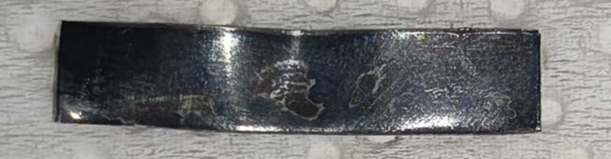
Figure 1: A silver strip testing positive for corrosive sulphur according to ASTM D1275
The contribution of CIGRE
CIGRE Study Committee A2 responded to reports of new cases of corrosive sulphur in transformers by creating a new Task Force in 2024. The remit was to collect cases of silver corrosion in tap-changers resulting from sulphur compounds in synthetic ester and mineral oil and determine if there was a need for further investigation of the phenomenon. The Task Force reported back in 2025 [5] that, in addition to needing to identify causes and assess the risk for transformer owners, that the current test methods for silver corrosion and corrosive sulphur are in need of improvement.
CIGRE SC D1 has now started the follow-on Joint Working Group (with SC A2) to carry out this further work – JWG D1/A2.84 “Silver Corrosion in Power Transformers”.
Case Studies
Examples of silver corrosion in transformers that were reported to the CIGRE Task Force are described below.
Case 1
Figure 2 below shows the blackened silver contacts of an in-tank selector switch. The transformer concerned was installed around 20 years ago and was supplied with uninhibited oil that contained dibenzyl disulphide. It had been passivated 10-15 years ago to reduce the risk of copper sulphide formation. After a concerning dissolved gas analysis (DGA) was received on a routine sample it was taken out of service and inspected.
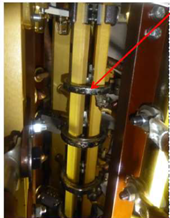
Figure 2: Blackened silver surfaces on in-tank selector
Silver corrosion was found within the selector switch contacts (in tank selector switch design) and electrical treeing was seen on the fibreglass support structure. Inspections of other transformers were then undertaken to determine whether this was a common issue. Varying levels of silver corrosion were found. Where silver sulphide has been identified the following corrective actions have been implemented successfully:
- Risk assessment
- Prioritise mitigation work
- On-site oil processing
- Manual cleaning of the silver contacts
Case 2
An investigation was carried out on an hermetically sealed, synthetic ester-filled transformer (20 kV/4.6 MVA), that had been in operation for 2 years. The de-energised tap-changer (DETC) contacts were evidently affected by corrosion (Fig.3) while the IEC, DIN and ASTM tests on the ester suggested the oils was corrosive.
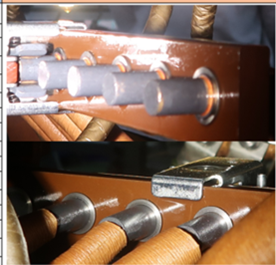
Figure 3: Silver sulphide observed on DETC contacts of a 20 kV transformer
The non-corrosive test results may indicate that the corrosive sulphur compounds had reacted to form silver sulphide deposition to the point of depletion leaving ester no longer corrosive. This will require inspection, electrical testing, estimation of the initial sulphur concentration and corrosion level in order to provide guidelines for risk assessment.
Sulphur testing
The available standards for quantification of corrosive sulphur species, S8 in particular were originally developed for a comparably higher sulphur content in mineral oils; existing methods were found to have a lack of sensitivity for different corrosive sulphur species that are found both in mineral oils and ester based insulating liquids.
Quantification of S8 using GC – micro ECD within IEC 62697- Part 3 was found to be very sensitive in both mineral oils and synthetic esters, down to 0.05 mg/kg, while other two methods were also investigated that were found to be significantly more sensitive (suitable for values of S8 close to 0.01 mg/kg) but are not widely used. Polarography is a voltametric method, which makes use of a liquid mercury electrode. [6]. A mass spectrometry method was also used following derivatisation of the sulphur molecule with triphenyl phosphine. The method was originally developed to quantify S8 in mineral oil [7] and applicability for synthetic esters will be investigated.
CIGRE WG D1/A2.84 will continue work to propose testing methods, guidelines for risk assessment, remedial actions as well as short-term and long-term mitigation techniques for permanent removal of corrosion in sustainable way, such as cleaning the corroded silver-plated contacts and treatment of the insulating liquid to enable continued normal operation of power transformers.
References
- TB 625 "Copper Sulphide Long Term Mitigation and Risk Assessment" Lukic, J; et al., CIGRE, Paris, France, 2015
- DIN 51353 Testing of insulating oils; detection of corrosive sulfur; silver strip test, Berlin, Germany: Deutsches Institut für Normung, 2021.
- ASTM 1275-24 Standard Test Method for Corrosive Sulfur in Electrical Insulating Liquids, West Conshohocken, PA: ASTM International.
- IEC TR 62697-3:2018 Test methods for quantitative determination of corrosive sulfur compounds in unused and used insulating liquids - Part 3: Test method for quantitative determination of elemental sulfur, Geneva, Switzerland: International Electrotechnical Commission.
- “Silver Corrosion in Liquid-filled Transformers” Lukic, J; et al., CIGRE Science & Engineering No. 38, Oct 2025
- Metrohm, Application Note No. V-85 "Elemental sulfur in gasoline".
- S. B. Garcia, J. Herniman, P. Birkin, J. Pilgrim, P. Lewin, G. Wilson, G. J. Langley and R. C. D. Brown, "Quantitative UHPSFC-MS analysis of elemental sulfur in mineral oil via derivatisation with triphenylphosphine: application to corrosive sulfur-related power transformer failure," Analyst, vol. 145, pp. 4782-4786, 2020.